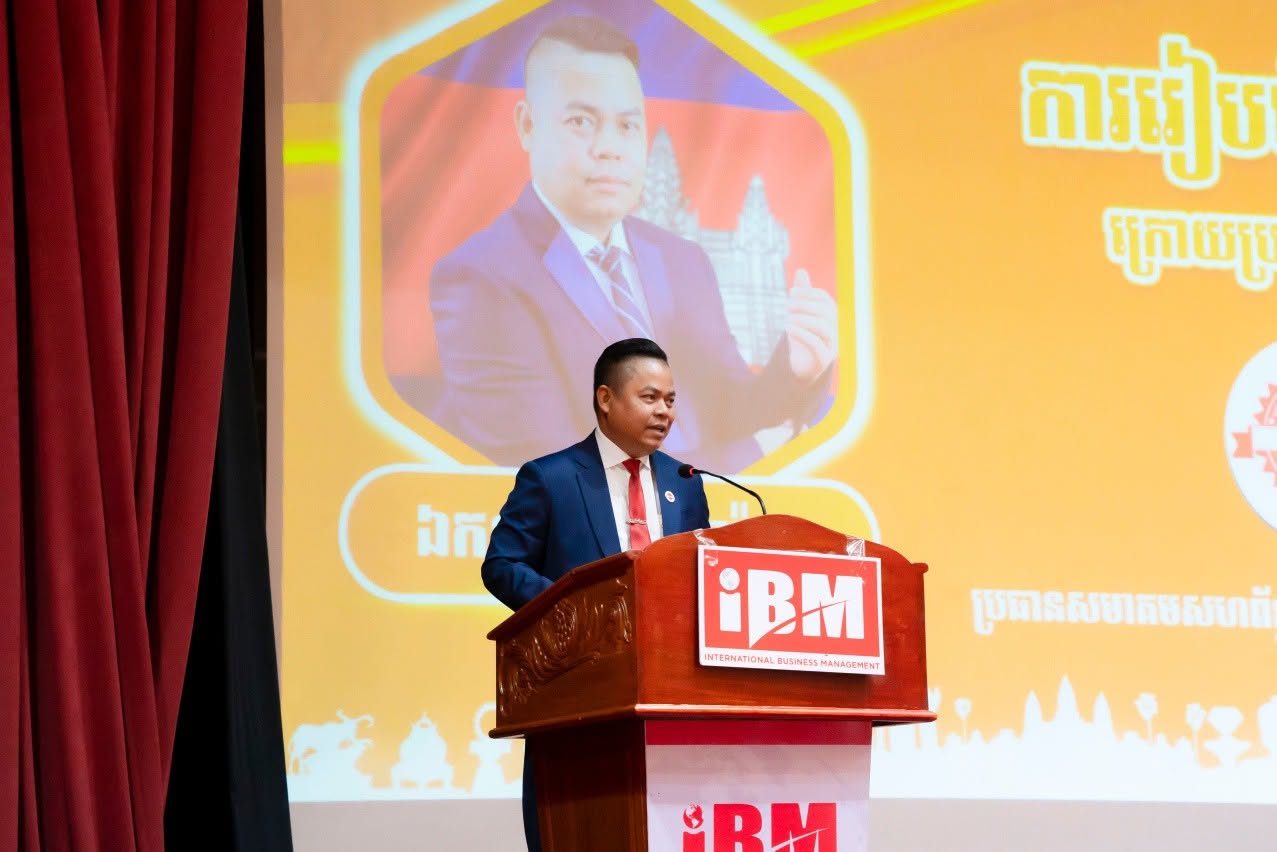

From Confusion to Clarity: Business Owner Yung Sokhara Highlights the Power of Accounting Knowledge

For many entrepreneurs, accounting can feel like an intimidating world of numbers, reports, and unfamiliar financial terms. Yet behind every sustainable business lies a simple truth: owners who understand their numbers are better equipped to understand their business.
That realization became especially clear for Mr. Yung Sokhara, owner of HTCT Ethnic Minority Guesthouse, after participating in The “Accounting Skills for Business Owners” coaching program.
Reflecting on his experience, Mr. Sokhara emphasized that accounting knowledge is not merely useful for accountants or finance departments—it is an essential management skill for every entrepreneur, regardless of the size of the business.
“I believe accounting skills are very important for every business owner—whether they operate a small, medium, or large business,” he said.
According to Mr. Sokhara, business owners need to understand the financial realities behind their operations, including cash flow, revenue, expenses, profit, capital, assets, and liabilities.
These are not simply accounting terms. They are the language through which a business communicates its true financial condition.
A company may appear busy, attract customers, and generate sales, but without a clear understanding of where money is coming from, where it is going, how much profit is actually being earned, and how much debt the company carries, an owner may still be making important decisions without sufficient financial clarity.
For Mr. Sokhara, this is precisely why business owners themselves need financial knowledge.
He stressed that participating in accounting training does not mean owners must personally perform every accounting task. Rather, they must understand enough to review the figures, ask the right questions, monitor financial performance, and make informed decisions.
“As business owners, we do not necessarily have to do all of the accounting ourselves,” he explained. “But as owners, we need to understand it.”

Four Days That Changed His Perspective
Before entering the program, Mr. Sokhara shared a belief that is common among many entrepreneurs: accounting seemed difficult.
Numbers appeared complicated. Financial classifications could be confusing. Understanding exactly where income, expenses, assets, liabilities, and capital belonged within financial records was not always straightforward.
But his perspective changed during the four-day coaching program.
“Before joining, I thought accounting was difficult. But after participating, I realized that it could be much easier to understand,” he said.
He credited the practical teaching approach, structured learning materials, and clear examples provided by the trainers for helping transform complicated accounting concepts into understandable and applicable business knowledge.
Participants learned how to record transactions properly, review revenue and expenses, calculate profit, and understand how different financial items should be classified.
For Mr. Sokhara, one of the most valuable outcomes was gaining clarity around concepts that had previously caused uncertainty.
“Before, I was confused about some of these areas,” he explained. “After joining the program, I became much clearer about what revenue is, what an expense is, what an asset is, what a liability is, and what capital means.”
That clarity can have consequences far beyond bookkeeping.

Accounting as a Tool for Better Leadership
In today’s increasingly competitive business environment, financial literacy is becoming an essential part of leadership.
Business owners are constantly required to make decisions: whether to expand, invest, hire additional employees, control costs, borrow money, purchase assets, launch new products, or enter new markets.
Each decision carries financial consequences.
Without reliable accounting information, decisions may be driven largely by assumptions or intuition. With strong financial understanding, however, entrepreneurs can evaluate their businesses based on evidence.
Accounting therefore becomes more than record-keeping. It becomes a decision-making system.
It allows owners to see whether the business is truly profitable, identify unnecessary expenses, monitor debts, understand available capital, manage cash flow, and recognize potential financial risks before they become serious problems.
For small and medium-sized enterprises in particular, this knowledge can be critical. Many growing businesses do not fail because they lack customers or ambition. Difficulties can arise because owners do not have a sufficiently clear picture of their financial position.
Learning to understand the numbers can therefore become an important step toward protecting what entrepreneurs have built.

Turning Numbers Into Business Confidence
Mr. Yung Sokhara’s experience demonstrates an important transformation: what initially appeared complicated became manageable once the concepts were explained in a practical and systematic way.
His journey from uncertainty to understanding reflects a broader lesson for entrepreneurs.
A business owner does not need to become a professional accountant.
But a responsible business leader should be able to look at the financial information of the company and understand what that information is saying.
Because behind every number is a story.
Revenue tells the story of the market’s response.
Expenses reveal how resources are being used.
Profit reflects the results of business decisions.
Assets demonstrate what the business controls.
Liabilities reveal what it owes.
Capital represents the foundation upon which the enterprise continues to grow.
When business owners understand these elements, accounting stops being something to fear.

It becomes something far more powerful:
A Tool For Clarity, Control, Confidence, And Sustainable Growth.
For entrepreneurs seeking to strengthen their businesses, the lesson from Mr. Sokhara’s experience is clear: understanding accounting is not simply about learning numbers—it is about learning to see the true condition of the business and becoming better prepared to lead its future.