
From Accounting Knowledge to Business Control: CEO Master Club Helps Entrepreneurs Build Stronger Financial Foundations

PHNOM PENH, Cambodia — For many entrepreneurs, the challenge is not simply knowing how to sell, grow revenue, or expand operations. The deeper challenge is understanding what is truly happening inside the business financially—and building a management system strong enough to support long-term growth.
That is the challenge addressed by the coaching program on “Accounting Skills for Managing Multiple Businesses” at the CEO Master Club of CEO Institute, a practical learning program designed to help business owners understand accounting not merely as a technical subject, but as a powerful management tool.
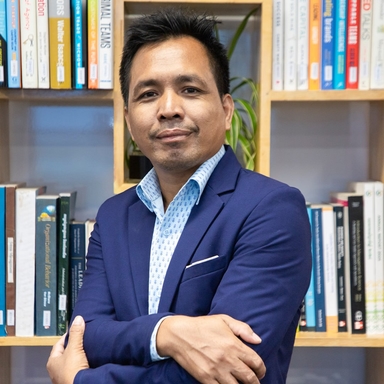
Among the participants sharing her experience is Ms. Leang Theara, owner of Theara Leang Co., Ltd., whose testimony highlights an important reality: even formal academic knowledge may not always translate directly into the practical systems required to manage a real business.
Ms. Theara explained that she had already completed a bachelor’s degree in accounting before joining the program. Yet, despite her academic background, she still felt there were important areas she did not fully understand—particularly how to organize accounting information according to proper business standards.

“I personally graduated with a bachelor’s degree in accounting, but I still did not fully understand how we should organize everything according to proper standards,” she said.
Through the coaching program, she said she gained a clearer and more practical understanding of what CEO Institute describes as the “Accounting House”—a simplified framework designed to help business owners understand five fundamental financial elements: income, expenses, capital, assets, and liabilities.
For Ms. Theara, the framework transformed accounting from something technical and complicated into something business owners could more easily understand and apply.
She described the five elements as essential foundations for anyone who wants to manage a business with greater clarity, discipline, and confidence.

Turning Complex Accounting Into Practical Business Knowledge
One aspect of the program that particularly impressed Ms. Theara was the teaching approach of Dr. Om Seng Bora.
According to her, the training is structured around the real situations entrepreneurs face every day. Instead of concentrating heavily on abstract accounting theory, the program focuses on the financial questions, problems, and decisions that matter directly to business owners.
She explained that this practical focus makes the lessons easier to understand because participants are already familiar with the realities of running businesses.
What might normally feel complicated becomes more accessible when it is connected directly to real business operations.
“The teaching is very easy to understand because every business owner is already involved in business operations,” Ms. Theara said. “The instructor teaches directly to the points they need and clearly explains the areas that are difficult.”

She offered a striking comparison from her own educational experience.
Knowledge that she had encountered across four years of university study, she said, was distilled into a highly focused four-day training program centered on practical application for business owners.
The purpose is not to replace a university accounting degree, but to translate essential accounting concepts into a form that entrepreneurs can understand and use in managing their companies.
For business owners who may never have studied accounting formally, that practical approach can be particularly valuable.

From Family-Style Operations to Standardized Business Management
Ms. Theara believes accounting becomes increasingly important when an entrepreneur wants to move beyond an informal or family-style business structure and build a more systematic organization.
Many businesses begin with passion, opportunity, relationships, and personal experience. In the early stages, owners may personally manage sales, cash flow, employees, purchasing, inventory, and customer relationships.
But as the company grows, informal management can become increasingly difficult.
Questions become unavoidable:
How much profit is the business truly generating?
Where is the money being spent?
How much capital has been invested?
What assets does the company own?
What liabilities must be managed?
Without reliable financial information, growth can create complexity rather than strength.
Accounting, therefore, is not only about recording numbers. It provides business owners with a clearer picture of what they own, what they owe, what they earn, what they spend, and whether their businesses are financially sustainable.
That is why Ms. Theara strongly encouraged other entrepreneurs to strengthen their accounting knowledge.
“I would like to send a message to all business owners that this accounting course is truly important,” she said. “It can help them move from running a family-style business toward operating according to proper business standards.”

Accounting as a Leadership Skill
The experience also reflects a broader philosophy behind the CEO Master Club of CEO Institute: business owners need more than entrepreneurial ambition. They need practical management capabilities that allow them to understand, control, and systematically develop their organizations.
A company may generate strong sales and still face financial difficulties.
A business may appear successful while carrying hidden liabilities.
An entrepreneur may work harder every year while still lacking a clear understanding of where the company’s money is going.
That is why financial literacy is ultimately a leadership issue.
When business owners understand their numbers, they are better positioned to ask the right questions, evaluate performance, control unnecessary expenses, understand assets and liabilities, communicate with accounting teams, and make decisions based on reliable information rather than assumptions.
For entrepreneurs seeking to manage not just one business but potentially several businesses, that capability becomes even more important.
The goal is not necessarily for every owner to become a professional accountant.
The goal is for business leaders to understand accounting well enough that the numbers become a management language rather than a mystery.
And for entrepreneurs seeking to transform a growing business into a professionally managed organization, that understanding may become one of the most important foundations for sustainable success.

Program: Coaching on “Accounting Skills for Managing Multiple Businesses”
Organizer: CEO Master Club of CEO Institute
Location: CEO Institute, Diamond Twin Tower, Koh Pich, Phnom Penh
Time: 8:30 a.m. – 5:30 p.m.