
From Avoiding Accounting to Using It as a Management Tool: A Business Leader’s Four-Day Transformation at CEO Master Club

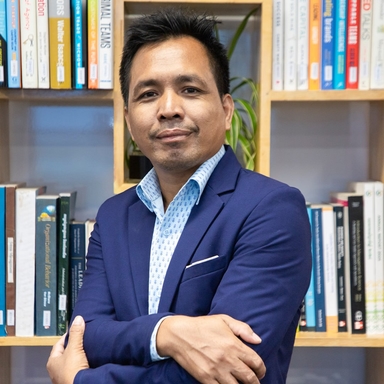
SOENG ATHIKAR, General Director of Master Star Land Property Co., Ltd., Says Practical Accounting Training Has Changed the Way He Understands and Manages His Business
PHNOM PENH, Cambodia — For many entrepreneurs, the greatest challenge is not starting a business. It is building a company that can continue to grow without requiring the owner to personally control every detail.
For Mr. SOENG ATHIKAR, General Director of Master Star Land Property Co., Ltd., that realization became increasingly clear as his company developed. One area in particular demanded his attention: accounting and financial management.
Although accounting had never been a subject he enjoyed—and was something he had once found difficult and complicated—his responsibilities as a business leader eventually made one truth impossible to ignore:
A CEO cannot effectively manage what he does not understand.
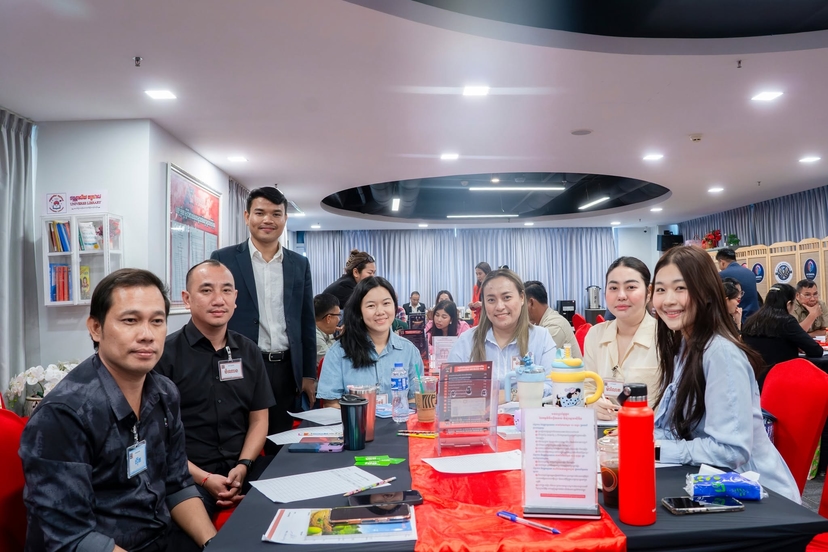
That realization led him to join CEO Master Club of CEO Institute and participate in the training program on “Accounting Skills for Managing Multiple Business Operations,” coached by Dr. OM Sengbora, Founder of CEO Master Club.
What followed, he said, was a four-day learning experience that fundamentally changed his understanding of accounting and its role in business leadership.

When Business Growth Creates a New Kind of Challenge
As a company expands, an entrepreneur’s responsibilities multiply.
There are employees to manage, customers to serve, operations to oversee, investments to evaluate, expenses to control, and decisions to make every day. Without a clear understanding of the financial condition behind those activities, even an experienced business owner can feel trapped inside the company he or she created.
Mr. Athikar said this was one of the challenges he had begun to experience.
“I realized that my company still had weaknesses, particularly in accounting and accounting management. This became an issue that made it difficult for me to step away from the business because I was extremely busy managing many different responsibilities.”
Rather than continuing to depend entirely on others for financial information, he decided that he needed to develop enough accounting knowledge to properly supervise his company and understand what was happening inside the business.
That decision brought him to CEO Master Club.

Turning a Difficult Subject Into a Practical Leadership Skill
Mr. Athikar openly acknowledged that accounting had never been an area he felt comfortable with.
“In the past, I really struggled with accounting, and I did not particularly like dealing with it.”
But business leadership has a way of forcing entrepreneurs to confront the very areas they once preferred to avoid.
As his company grew, accounting was no longer simply the responsibility of the accounting department. It had become a management necessity.
He needed to understand the information being presented to him. He needed to recognize whether business activities were being properly managed. Most importantly, he needed the confidence to evaluate the work and financial operations of his team from the perspective of a chief executive.
The four-day training program began changing that perspective.
“After studying this subject, I gained knowledge that I could take back and apply to the development of my company. I could see genuine positive results, and it made many things easier for my business.”
For him, the value of the course was not simply learning accounting terminology.
It was learning how accounting can become a management tool.

“Every Part of the Four Days Was Something I Needed”
Mr. Athikar described the coaching delivered by Dr. OM Sengbora as exceptionally practical and relevant to the realities he faced as a business owner.
“Regarding the coaching of Dr. OM Sengbora, I truly recognize it as excellent. From the beginning of the first day until the final day, every part of these four days addressed something that I needed.”
Before attending the program, he said he believed accounting would remain difficult for him. He was unsure what solutions existed or how he could develop enough understanding to manage the financial side of his company effectively.
The training challenged that assumption.

“Previously, I did not understand these things. I thought accounting was extremely difficult for me, and I did not know what kind of solution could help me.”
What surprised him most was the speed at which his understanding changed.
“I never expected that four days could make such a difference—from being someone who knew almost nothing about accounting to becoming someone who could understand much more about it.”
That transformation carries an important lesson for entrepreneurs: a business owner does not necessarily need to become a professional accountant.
But a business owner does need to understand the language of the business.
And accounting is one of its most important languages.

From Business Operator to Business Overseer
One of the most significant outcomes of the training, according to Mr. Athikar, was his improved ability to examine and understand the work taking place within his own company.
“As a General Director, I can now look at different operations within my company and better understand the work and transactions carried out by my team.”
That distinction is critical.
Without management knowledge, an owner can become consumed by daily tasks.
With stronger systems, financial understanding, and leadership capability, the owner can begin moving from doing everything personally toward monitoring, analyzing, directing, and improving the organization.
For many entrepreneurs, this is the difference between simply owning a job and building a sustainable enterprise.
It is also the difference between being controlled by the business and learning how to control the business.

Escaping the “Business Prison”
Mr. Athikar’s message to other entrepreneurs was particularly direct.
He encouraged business owners who want to grow their companies, strengthen their entrepreneurial abilities, and free themselves from constant operational pressure to consider joining CEO Master Club.
“For those who have not yet become members of CEO Master Club, I encourage you to take action. If you want to become a successful entrepreneur, if you want your company to grow, and if you want to escape from being a ‘prisoner of your own business,’ I invite you to join CEO Master Club.”
The phrase “prisoner of your own business” describes a situation familiar to many entrepreneurs.
The business may be growing, yet the owner cannot leave it.
The company may have employees, yet every decision still depends on the founder.
Revenue may be increasing, yet the owner remains uncertain about profitability, cash flow, costs, and financial performance.
The organization exists—but the systems required for independence, control, and sustainable growth may still be missing.
For Mr. Athikar, gaining practical accounting knowledge became one step toward changing that reality.

From Doubt to Confidence
Before joining, he admitted that he had questions about what CEO Master Club could genuinely offer.
His experience as a member changed his perception.
“Before joining, I still had doubts. I wondered whether it would really be what I expected. But after becoming a member of CEO Master Club, I realized that what the Club provides is truly valuable.”
More importantly, he said the knowledge and coaching were directly relevant to the growth of his own business.
“CEO Master Club has genuinely helped me develop and grow within my field.”

His experience reflects a broader principle of entrepreneurship:
Growth begins when business owners stop avoiding the areas they find difficult and start developing the knowledge required to lead them.
Accounting may appear to be about numbers.
But for a CEO, those numbers tell the story of the business.
They reveal whether revenue is translating into profit.
They show where money is being spent.
They help identify weaknesses before those weaknesses become crises.
They give leaders evidence upon which to make decisions.
And ultimately, they help entrepreneurs move from intuition-based management toward informed, disciplined, and sustainable leadership.

Four Days That Changed the Way a CEO Sees His Business
Mr. Athikar entered the training as a business leader who found accounting difficult and uncomfortable.
He completed it with a new understanding of how accounting could help him supervise his company, evaluate operations, communicate with his team, and make stronger management decisions.
That is why, for him, the four-day program was more than a training course.
It was a shift in perspective.
A shift from avoiding numbers to understanding them.
From depending entirely on others to being able to review and question financial information.

From operating inside the business to developing the capacity to manage it from a higher level.
And perhaps most importantly, from seeing accounting as a difficult technical subject to recognizing it as one of the essential tools of business leadership.
“This course is extremely important.”
For entrepreneurs seeking sustainable growth, that message carries a powerful reminder:
You do not need to know everything before becoming a business owner. But as your company grows, you must continue becoming the kind of leader capable of understanding, controlling, and guiding what you have built.
Program Information
Training: Accounting Skills for Managing Multiple Business Operations
Program: CEO Master Club of CEO Institute
Coach: Dr. OM Sengbora, Founder of CEO Master Club
📍 Venue: CEO Institute, Diamond Twin Tower, Koh Pich, Phnom Penh
🕐 Training Hours: 8:30 AM – 5:30 PM