
Raising Courageous Young Leaders: A Parent’s Journey with the Outstanding Young Leader (OYL) Coaching Program

Every parent dreams of seeing their child grow into a confident, responsible, courageous, and capable person—someone who can make wise decisions, communicate effectively, care for themselves, and positively influence the people around them.
But great leaders are not created overnight. Leadership is built through experience, guidance, discipline, practice, encouragement, and the courage to step beyond one’s comfort zone.

This is the purpose behind the Outstanding Young Leader (OYL) Coaching Program at CEO Master Club: to help young people discover their potential, strengthen their character, develop leadership capabilities, and prepare themselves to become outstanding leaders of their own lives and of the future.

From Shyness to Courage: A Mother Sees the Transformation
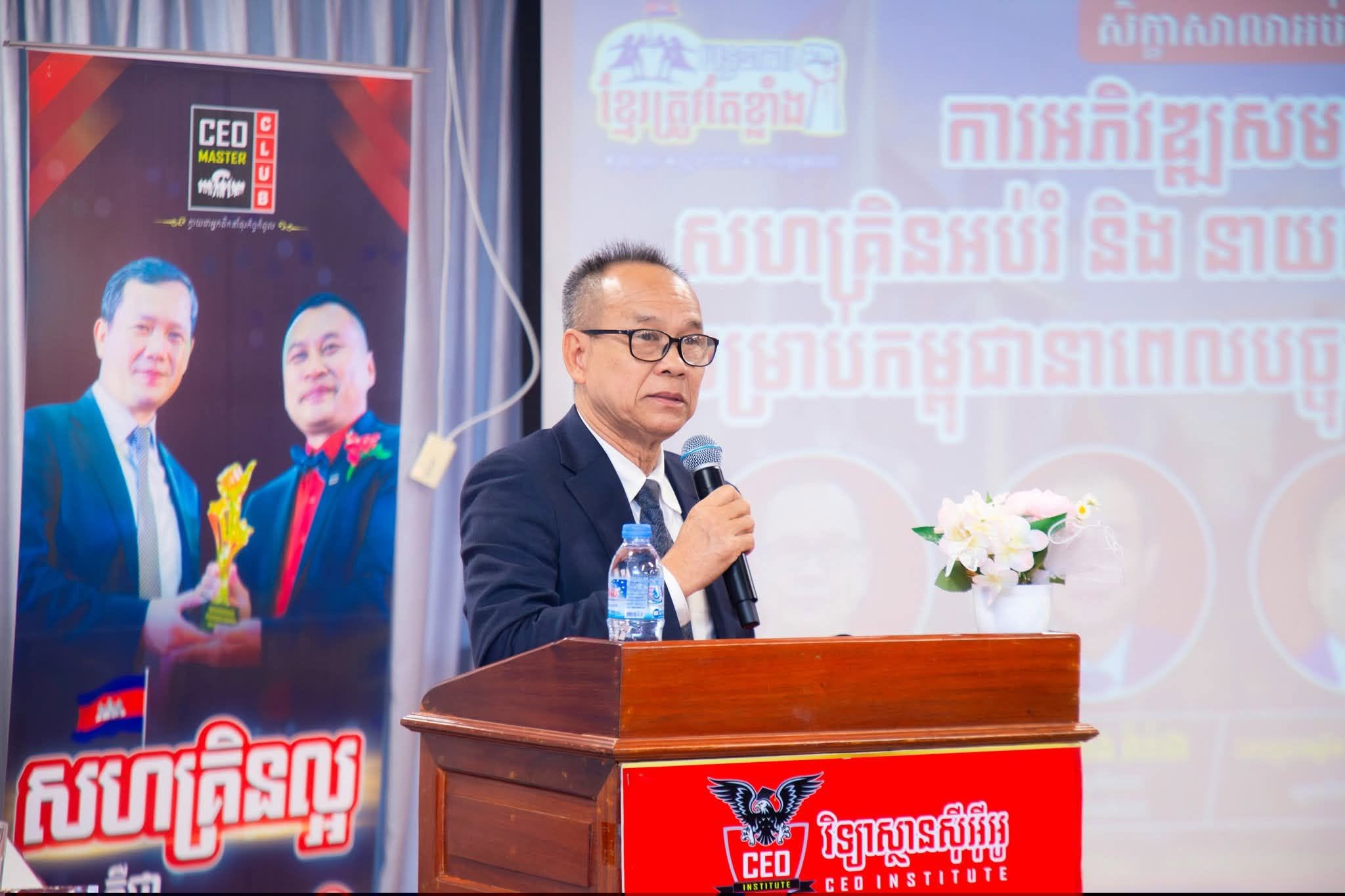
For Lieng Sreytieng, a mother from Siem Reap Province, the impact of the OYL journey is deeply personal. Two of her children are already OYL members, and after witnessing meaningful changes in them, she is now encouraging her third child to begin the same journey.

Sharing her experience, she said:
“I am a mother of three children, and two of my children are currently members of OYL. I came today because I want to encourage my third child to join. My third child is very shy and not very courageous. This year, I think I have decided to let this child become a member as well. I really had to encourage my child to come today because my child did not want to come. As parents, however, we felt that we needed to bring our child here.
With the two older children, I can truly see strong leadership qualities in them now. They have become courageous and are willing to participate and cooperate in the programs and activities of CEO Master Club.
My name is Lieng Sreytieng. When I first came here, I felt just like many of you. I was deeply emotional and could hardly hold back my tears. After participating in this program, I decided to enroll both of my children as members. They have now been members for about one year.
Today, I came to encourage my third child, who is only 10 years old. As for my other two children who are currently members, what we hoped to see in them has, in my view, already been achieved by around 80%—especially their courage and leadership. Of course, sometimes they still need additional encouragement and guidance from their teachers.
Children today belong to a different generation. They are from a younger generation, while many of us mothers are from Gen Y. Since my two children joined the program, we have learned to communicate and adjust to one another more. We try to meet each other halfway—50/50. We adapt to them, and they also learn to adapt to us.
Parents today work hard to earn money to support their children’s education. We try to find good schools for them, and we do everything we can for our children. But our efforts alone are still not enough. There must also be cooperation between parents and children. That is what I wanted to share. Thank you very much.”

Her testimony reflects an important truth about education: parents can open doors, teachers can provide guidance, and programs can create opportunities—but lasting growth becomes possible when children themselves learn to participate, take responsibility, and act.

Leadership Begins with the Courage to Grow
A child who is shy today does not have to remain shy forever.
A child who is afraid to speak today can learn to express ideas with confidence.
A child who waits for others to lead today can gradually learn to take responsibility, make decisions, cooperate with others, and become a positive influence.
This is why leadership development should not begin only when someone receives a management position or becomes an adult. The foundations can be cultivated much earlier—through everyday habits, communication, responsibility, teamwork, self-discipline, and opportunities to practice courage.
The OYL journey is therefore not simply about teaching young people to “be leaders.” It is about helping them develop the mindset and capabilities to lead themselves first.
Because before a person can lead others, they must learn to manage their emotions, choices, habits, responsibilities, relationships, and direction in life.

Parents and Children Must Grow Together
One of the most powerful messages in Lieng Sreytieng’s experience is her emphasis on cooperation between generations.
Parents may work tirelessly to provide tuition, books, good schools, opportunities, and a better future. Yet material and educational support alone cannot replace communication and mutual understanding within the family.
Children need guidance—but they also need to be heard.
Parents need to guide—but they also need to understand.
The strongest development happens when parents, children, teachers, and mentors work together toward the same goal.
The “50/50” approach described in her testimony captures this spirit beautifully: parents learn to understand their children’s generation while children learn responsibility, respect, and cooperation with their parents.
That relationship itself becomes part of leadership education.

A Healthy Young Leader Is a Stronger Young Leader
Leadership is not demonstrated only through words. It is also reflected in the way young people learn to care for themselves.
A strong body supports an active mind. Healthy habits can strengthen energy, concentration, discipline, and the ability to continue learning and growing.
Young leaders should therefore learn early to value their health—to eat nutritious food, exercise regularly, rest appropriately, and dedicate time to their physical and mental well-being.
Be a role-model leader not only through what you say, but through what you do.
🏃♂️🔥 A stronger body supports an active and creative mind. 🧠⚡️
Never become so busy pursuing achievement that you forget to care for the person who must achieve it.
Love what you do—but never forget to love and protect your health. ❤️

The Greatest Investment Is the Person Your Child Is Becoming
Parents naturally think about their children’s academic future: Which school should they attend? What subjects should they study? What career should they pursue?
But there is another question worth asking:
What kind of person will my child become?
Knowledge matters.
Education matters.
Career preparation matters.
But so do courage, responsibility, communication, discipline, leadership, cooperation, healthy habits, and the ability to face challenges without giving up.

The story of Lieng Sreytieng and her children reminds us that transformation often begins with a simple opportunity—the opportunity for a young person to step outside a familiar environment, try something difficult, meet new people, accept guidance, and discover capabilities they may not yet know they possess.
The child who hesitates today may become the person who confidently steps forward tomorrow.
The child who is afraid to speak today may one day inspire hundreds.
And the child who learns to lead themselves today may someday be ready to lead a family, an organization, a community, or even contribute meaningfully to the future of a nation.
That is why developing an outstanding young leader is not only about preparing a child for the next class, the next examination, or the next school year.
It is about preparing them for life.

Outstanding Young Leader (OYL) Coaching Program
Develop courage. Build character. Strengthen leadership. Prepare for life.